
For two years, an MCP server has told an AI agent what it can do: here are my tools, and here is what each one takes. What it could not easily say was how to do a job well. That changed on Nov. 24, 2026, when Anthropic put Skills over MCP into public beta in Claude and Claude Code, the same week the Model Context Protocol turned two.
With Skills over MCP, a server can ship skills (best practices, step-by-step workflows, even playbooks for one organization) right alongside its tools. Anthropic also made two other MCP features generally available: Tasks and Elicitation. If you followed our coverage of MCP file transfers and its release cycle, this is the next big step. Here is what changed and what to check before you turn it on.
Key takeaways
- Skills over MCP is a public beta: on by default for Claude Pro, Max and Ultra, available to Team plans once an admin enables it, and coming soon to Enterprise.
- Claude loads a skill only when it is needed, and skills update with the server, so there is nothing separate to install.
- Tasks (long-running work) and Elicitation (pausing to ask the user) are now generally available on Pro, Max and Ultra, and rolling out to Team and Enterprise.
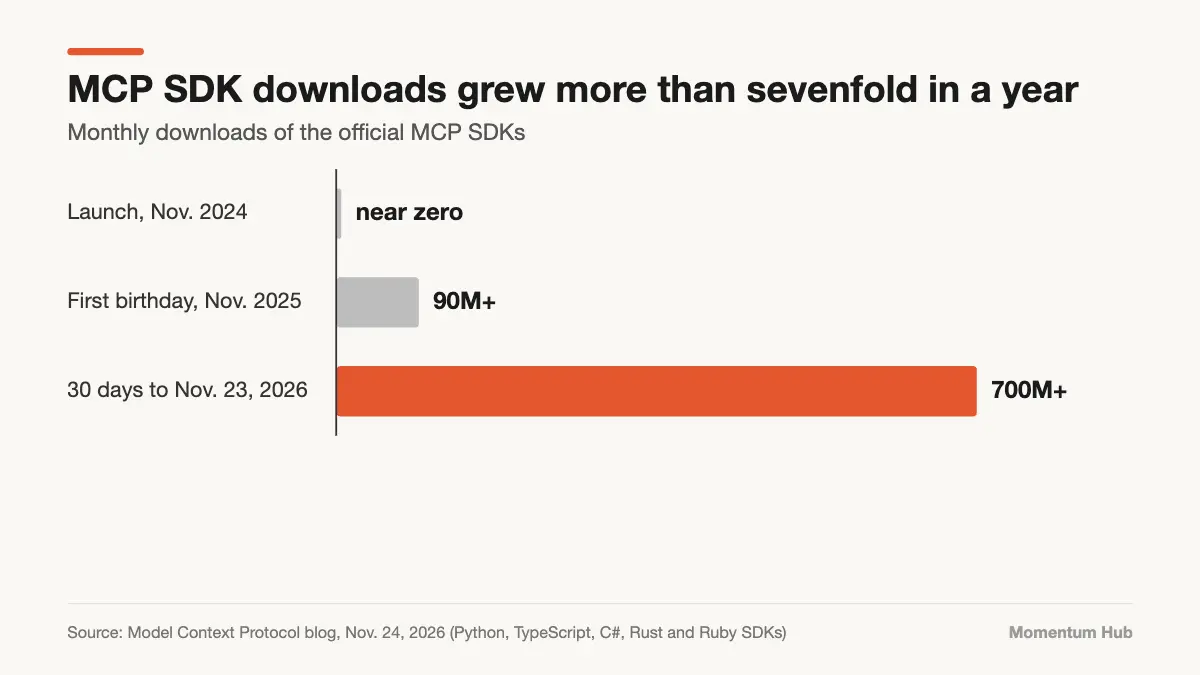
- MCP now sees more than 700 million monthly SDK downloads, according to the MCP blog.
700M+
Monthly downloads of the official MCP SDKs in the 30 days to Nov. 23, 2026, up from more than 90 million a year earlier, per the MCP blog.
What Skills over MCP Changes
Tools say what, skills say how
Tool names and descriptions tell Claude what a server can do. They do not explain how to handle a specific use case. A skill fills that gap with guidance Claude can follow for longer, multi-step work. In Anthropic’s words, Claude “loads a skill only when it’s needed, keeping context use low.”
Skills travel with the server
Because skills update with the server, the people who build a connector can ship tools and guidance together. Users have nothing extra to install, and they get the latest workflow whenever the server changes.
Early adopters
Anthropic names four examples of Skills over MCP in use. Shopify helps Claude design and update a merchant’s online store end to end. HubSpot onboards customers. Atlassian helps Claude draw on organizational context for insights and work analysis. Carta will help Claude draft and issue equity from an uploaded document, a feature marked as coming soon.
Anthropic’s own short explainer is a good refresher on what a skill is. It is a vendor video.
Tasks and Elicitation Are Now Generally Available
Skills were not the only news. Two features for longer, more interactive work moved out of beta, and a third is on the way.
- Tasks. Tool calls used to have to finish before Claude could move on. With Tasks, a server can run long operations, even full agent loops, while Claude keeps working and picks up the result later. ZoomInfo uses it for deeper account and contact research.
- Elicitation. A server can pause mid-call to ask the user for input through a form or link, then continue. Supabase confirms costs before creating a paid project and before running destructive SQL. Railway asks before removing a service. GitHub asks users to type a repository’s name before an agent deletes it.
- File Uploads. An extension that lets Claude pass PDFs, spreadsheets and images to a server without routing them through the context window. It is rolling out soon.
All of these are part of the open MCP spec and its extensions, so a server that supports them works in any compatible client, not only Claude.
The Scale Behind the Update
The MCP blog’s birthday post says the official SDKs have crossed 5 billion total downloads, more than 4.5 billion of them in the past year, with more than 2,500 unique contributors. Anthropic counts more than 10,000 MCP connectors for Claude. Download counts vary by method, so treat them as a sign of momentum rather than a census.
Chase AI’s eight-minute video covers this week’s MCP upgrade from a builder’s point of view.
What Admins and Builders Should Check
Skills over MCP changes what you approve when you connect a server. You are no longer approving only a set of tools. You are also approving instructions that can change when the server updates.
- Decide on the Team setting deliberately. On Team plans, the beta stays off until an admin enables it.
- Prefer servers from publishers you already trust. Skills update with the server, so trust the publisher, not just today’s version.
- Review what a skill tells Claude to do. Especially for anything that spends money or deletes data.
- Use Elicitation for destructive actions in your own servers. It is the built-in way to ask before acting.
- Start with one repeatable workflow. If you build servers, turn one well-understood process into a skill first.
A skill is plain guidance. Here is a simplified, illustrative example of what a server might ship:
---
name: weekly-sales-report
description: Build the weekly pipeline report from CRM data
---
1. Pull deals updated in the last 7 days.
2. Group them by stage and owner.
3. Ask the user before emailing the report.
That last step is the habit worth copying. For more on why checks matter, see our guide to AI agent verification and our overview of agent skills in 2026.
Quick Questions, Answered
What is Skills over MCP? A feature, now in public beta in Claude and Claude Code, that lets MCP servers publish skills alongside their tools so Claude knows how to handle specific workflows.
Do I need to install skills separately? No. Skills come with the server and update with it. Claude loads one only when it needs it.
Is it available on every plan? It is on by default for Pro, Max and Ultra, available to Team once an admin enables it, and coming soon to Enterprise.
Final Thoughts: Connectors Are Becoming Coworkers
Skills over MCP pushes connectors from “here are my buttons” toward “here is how we work.” That is useful, and it raises the bar for trust. Turn it on where the publisher is one you would trust to train a new colleague, keep approvals on anything destructive, and watch how the skills change over time. If you are new to agent tooling, our CLI-Anything explainer shows another way agents get real tools.