
- 1. 54% Versus 51%: Platforms Passed Publishers
- 2. 77% Watch News Video Weekly
- 3. 45 of 48 Markets: Online Video Beats TV News
- 4. 34%: Where News on YouTube Stands
- 5. 27% Get News From Creators
- 6. 22%: The Trust Gap on Social Platforms
- Why Good Reporters Do Not Automatically Make Good Video
- A Starter Playbook for Small Newsrooms
- The Bigger Picture: Reach on Rented Land
- Quick Questions, Answered
- Final Thoughts: Follow the Audience, Keep the Standards
News on YouTube used to mean clips from television broadcasts. Now it increasingly means individual journalists, many of them writers by training, building their own channels. On November 17, 2026, Nieman Lab highlighted a New Yorker piece by Kyle Chayka about exactly that: writers trying to make news on YouTube.
The move makes sense once you look at the audience data. This year’s Reuters Institute Digital News Report, summarized by Edelman, surveyed nearly 100,000 people in 48 countries. Six numbers from it explain why reporters are picking up cameras. They also add to the picture we drew in local news traffic in 2026.
Key takeaways
- For the first time, more people get online news through social and video platforms (54%) than through news organizations’ own sites and apps (51%).
- 77% watch online news video every week.
- YouTube is used for video news by 34%, second only to Facebook.
- Trust is the weak point. Only 22% trust news they find on social media.
77%
Share of people who watch online news video each week, across 48 countries in the Reuters Institute Digital News Report 2026, as summarized by Edelman.
1. 54% Versus 51%: Platforms Passed Publishers
More people now reach online news through social media and video networks than through publishers’ own websites and apps. The gap is small, 54% to 51%, but the report says it is the first time third-party access has come out ahead.
For a journalist, that changes the math. If the audience is on platforms, building a presence there is no longer a side project.
2. 77% Watch News Video Weekly
Video is now a normal way to follow the news. More than three in four people in the survey watch online news video every week.
3. 45 of 48 Markets: Online Video Beats TV News
Online news video reaches more people than broadcast television news in 45 of the 48 markets studied. Television is still large, but it is no longer the default screen for news.
4. 34%: Where News on YouTube Stands
Among platforms used for video news, Facebook leads at 43%. YouTube follows at 34%, ahead of Instagram at 26% and TikTok at 20%.
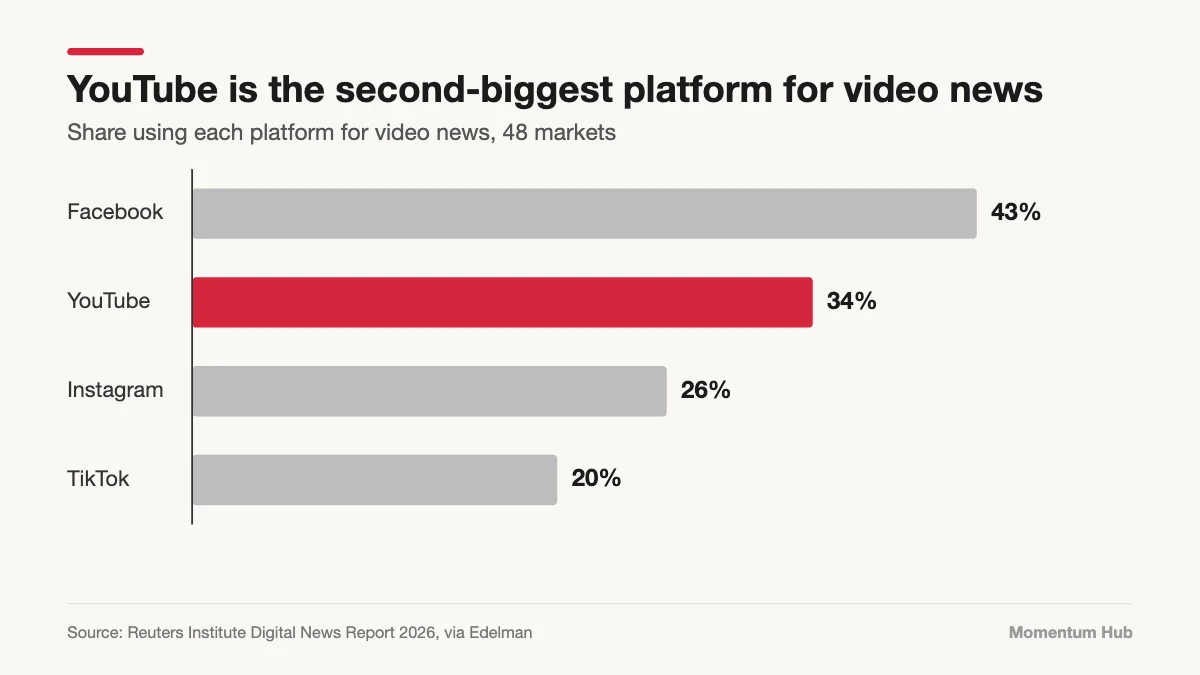
YouTube also has features the others lack: long videos, searchable archives, and revenue sharing. That makes news on YouTube a better fit for explanatory reporting than a feed built for short clips.
5. 27% Get News From Creators
More than a quarter of people get news from creators. Yet only 3% rely on creators alone. Most audiences mix creators with traditional outlets.
That is an opening for trained journalists. They can offer what audiences like about creators, a consistent voice and direct contact, with reporting standards behind it.
6. 22%: The Trust Gap on Social Platforms
Overall trust in news stands at 37% in the report, the lowest since the study began. Trust in news found through social media is lower still, at 22%.
So the platform that brings reach also brings doubt. We saw a more hopeful version of this in the US, where trust in news rose slightly this year.
Why Good Reporters Do Not Automatically Make Good Video
Nieman Lab’s note on the New Yorker piece makes a sharp point. The skeptical, guarded manner that serves a reporter well does not always translate into being engaging on camera.
Video rewards warmth, pacing, and a clear point of view about why a story matters. Those can be learned. They are different skills from writing a tight lead, and it helps to say so plainly.
A Starter Playbook for Small Newsrooms
If you want to test news on YouTube without betting the newsroom on it:
- Pick one beat where you already have depth and a reporter who is comfortable talking.
- Start with one format, such as a weekly five-minute explainer, and keep it for eight weeks.
- Show your work on screen: documents, data, the places you visited. Evidence builds trust.
- Link every video to the full story on your own site, so the platform sends readers back.
- Read the comments for questions, and answer them in the next video.
- Track watch time and returning viewers, not only views.
Audio teams have been through a similar learning curve, as we described in podcast trends.
The Bigger Picture: Reach on Rented Land
Moving to YouTube solves one problem and creates another. It puts journalism where people are, and it makes that journalism dependent on a platform’s rules and recommendation system. The year’s fights over AI and content, covered in AI as the new gateway to information, show how fast those rules can change.
The sensible approach is to use platforms for discovery and your own site, newsletter, or membership for the relationship.
Quick Questions, Answered
Is news on YouTube replacing news websites? Not replacing, but platforms now edge out publisher sites and apps as a way to reach online news, 54% to 51%.
Do people trust news on video platforms? Less than news overall. Trust in news via social media is 22%, against 37% for news in general.
Do audiences rely only on creators? Rarely. Only 3% say creators are their sole source.
Final Thoughts: Follow the Audience, Keep the Standards
The numbers explain why writers are heading to YouTube. The trust figures explain what they need to bring with them. News on YouTube works best when it looks like journalism: sourced, transparent, and worth returning to.