


The Model Context Protocol is the plumbing that lets AI assistants connect to apps, files, and data. Good plumbing is boring, predictable, and standardized. This month, MCP’s maintainers took two steps in exactly that direction.
One is an experimental way to move files between clients and tools. The other is a predictable release schedule for the specification itself. If you build with AI connectors, or just rely on them, both are worth understanding. They are part of the bigger shift we described in how AI is redefining communication.
Key takeaways
- A new experimental MCP extension lets files move directly between clients and servers, without passing through the model.
- The model sees only metadata and results, never the file’s bytes or the transfer URLs.
- MCP specification releases are moving to a six-month cycle, in March and September.
- The next target version is 2027-03-30. Existing clients and servers need no changes for the new process.
The File Problem
AI tools increasingly need to handle real files: save a PDF to cloud storage, pull a CSV into a sandbox. Until now each server invented its own way to do that. The goal of the new work is a standard way to transfer files without the model handling the bytes.
How the Files Extension Works
The proposed extension, identified as io.modelcontextprotocol/files, keeps the bytes out of the conversation. For an upload, the client first calls the tool with only the file’s name, type, and size. The server checks permissions and replies with a place to upload. The client sends the file straight there, then retries the tool call, and the server verifies the file arrived before running the tool.
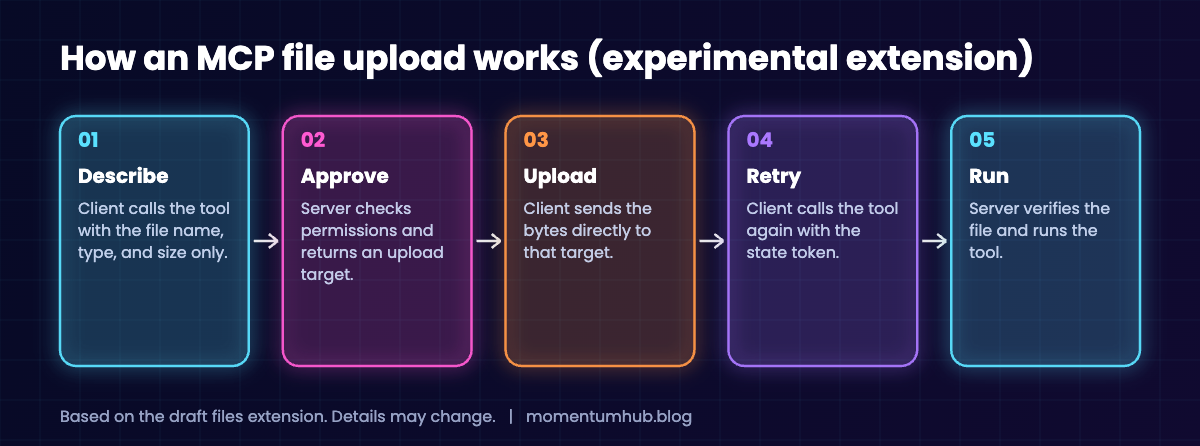
Downloads are simpler. The tool result points to a download target, and the client fetches the file and can verify it against a checksum. Small files can still be sent inline.
Security Is Part of the Design
The draft is candid about risks. Clients must refuse redirects and reject targets that try to supply their own authorization headers. Because a malicious server could point an upload at an endpoint it controls, the draft recommends allowlisting upload destinations. And a matching checksum proves a file is intact, not that it is safe, so downloads should be treated as untrusted.
This is the same least-privilege thinking we covered in modern security software. The extension is experimental, with no reference implementation yet, and the authors expect to finalize it before the end of the year.
A Predictable Release Cycle
The second change is about rhythm. MCP specification releases will now land every six months, on the last Tuesday of March and September. The next target is version 2027-03-30.
Each cycle has published stages: planning eight months out, a soft freeze two and a half months before release when only fixes are accepted, SDK betas a month and a half out, and a hard freeze one month before. A release manager role, taken on this cycle by Luca Chang alongside two existing maintainers, keeps it on track.
Why Boring Is Good
For anyone building connectors, a fixed calendar means you know when the ground will stop moving. Proposal authors know when reviews happen. SDK maintainers know when to ship. The change affects how releases are prepared, not the protocol’s messages, so nothing breaks today.
It also signals maturity. The current specification, released on July 28, 2026, brought a stateless core and a formal extensions framework. The files extension is growing inside that framework.
What to Do Now
- If you build MCP servers that touch files, read the draft and note the upload flow.
- If you maintain a client, plan for origin allowlists and redirect handling.
- Put March 30, 2027 on your calendar and work back from the freeze dates.
- If you only use connectors, expect smoother file handling in your AI tools over time.
What the Model Context Protocol Means for Everyday Users
You may never read a protocol specification, and you should not have to. But these changes shape the tools you use. When connectors share one way to move files, assistants can work with your documents more reliably, with less of your data passing through the model.
Standards are slow by design. That slowness is what lets many companies build on them with confidence.
Quick Questions, Answered
Does the AI model see my file? Under this design, no. It sees metadata and the tool’s text result, not the bytes or transfer URLs.
Is the files extension ready for production? Not yet. It is experimental and optional, and the draft is still open for feedback.
Do I need to update anything for the new release cycle? No. It changes how releases are planned, not how clients and servers talk.
Final Thoughts: Infrastructure You Can Plan Around
Standards win by being dependable. File transfer that keeps data out of the model, and a calendar anyone can plan around, are small steps that make AI connectors easier to trust.
That is how a clever idea becomes infrastructure.


