
- Understanding the Problem: Journalism in the Age of Misinformation
- Blockchain Basics: What Makes It a Game-Changer for Journalism?
- Applications of Blockchain in Combating Misinformation
- Real-World Examples: Blockchain in Action
- Challenges and Limitations of Blockchain in Journalism
- Future Outlook: Blockchain and the Evolution of Journalism
- Conclusion
The digital age has revolutionized journalism, but it has also given rise to one of its greatest challenges: misinformation. Fake news, manipulated narratives, and disinformation campaigns erode public trust and undermine the integrity of the media. Amid this crisis, blockchain technology emerges as a potential solution. Known for its secure and transparent nature, blockchain holds promise for restoring credibility to journalism. This post explores how blockchain could transform the fight against misinformation, enhance accountability, and shape the future of trustworthy media.
Understanding the Problem: Journalism in the Age of Misinformation
The Rise of Misinformation
Misinformation spreads rapidly across digital platforms, fueled by algorithms prioritizing sensational content over accuracy. This phenomenon undermines public trust in traditional and digital media, creating an urgent need for solutions that promote authenticity and accountability.
Challenges Faced by Journalists
Journalists grapple with verifying sources, combating fake news, and protecting their own work from unauthorized manipulation. The lack of a universal system for verifying content authenticity exacerbates these challenges, leaving both creators and consumers vulnerable.

Blockchain Basics: What Makes It a Game-Changer for Journalism?
Decentralized Ledger Technology
Blockchain is a decentralized digital ledger that records transactions securely and transparently. Its key features—immutability, transparency, and decentralization—make it a powerful tool for addressing misinformation.
How Blockchain Works in Media
Each piece of content, from articles to images, can be time-stamped and verified on a blockchain. Once recorded, it cannot be altered without consensus, ensuring content authenticity.
Applications of Blockchain in Combating Misinformation
Verifying Content Authenticity
Blockchain can serve as a verification tool for media content. Journalists can register their work on a blockchain platform, creating an immutable record that confirms its origin and integrity.
Enhancing Source Transparency
Blockchain can document the entire lifecycle of a news story, from sourcing to publication. Readers can trace the origins of information, fostering greater transparency and trust.
Fighting Deepfakes and Manipulated Media
Blockchain’s ability to create a digital fingerprint for content can help identify and flag altered media, such as deepfakes, reducing their spread.

Real-World Examples: Blockchain in Action
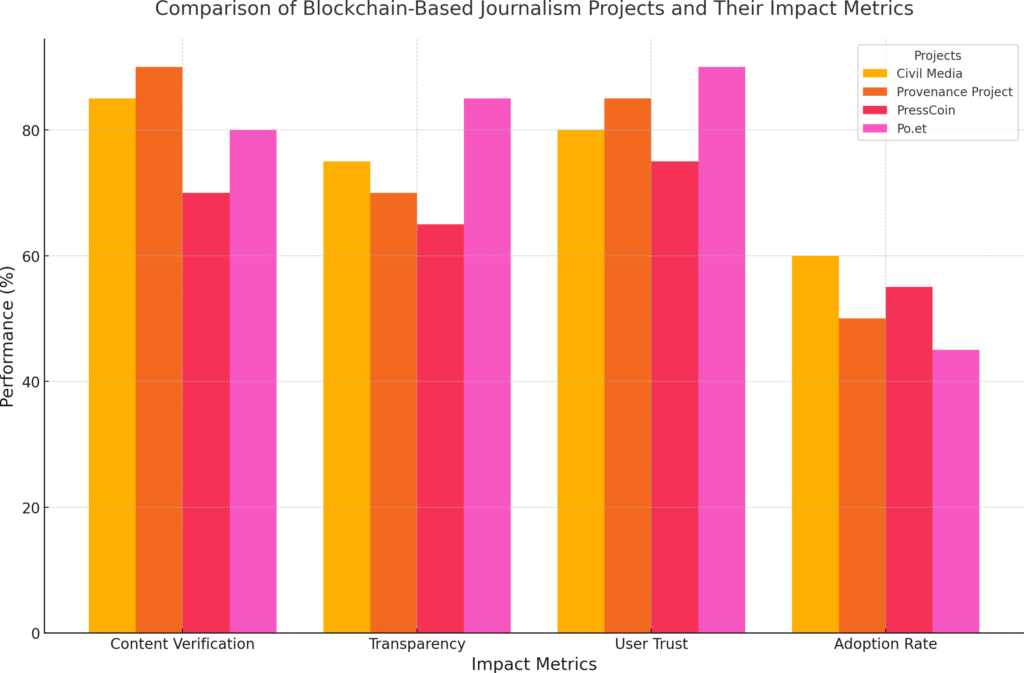
Civil Media Company
Civil uses blockchain to support ethical journalism. Its platform allows readers to support credible news outlets through cryptocurrency while ensuring content authenticity.
The New York Times Provenance Project
The Provenance Project experimented with blockchain to verify the origin of digital images, aiming to combat visual misinformation.
Challenges and Limitations of Blockchain in Journalism
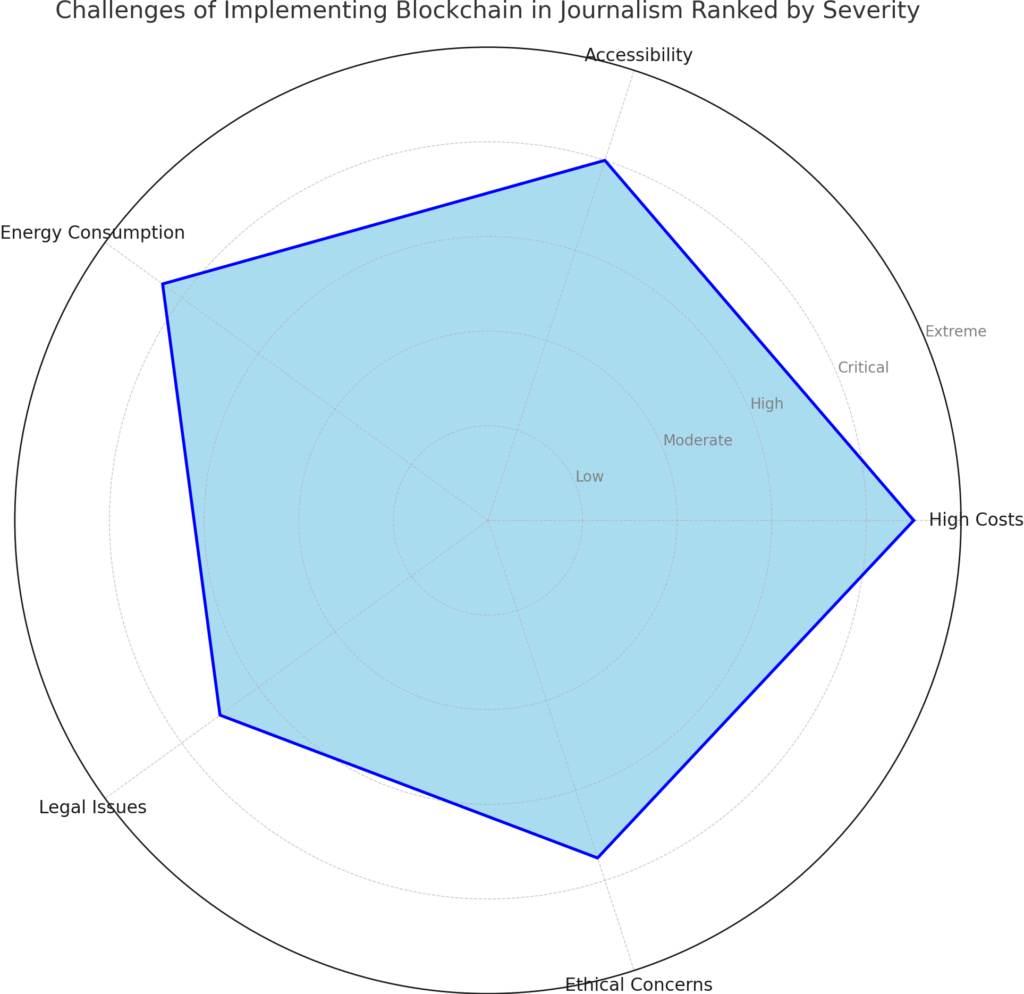
High Costs and Energy Consumption
Blockchain systems require significant computational resources, making them expensive and environmentally taxing.
Accessibility and Adoption
For blockchain to succeed in journalism, widespread adoption by media organizations and public understanding of its benefits are essential.
Legal and Ethical Concerns
The use of blockchain in media raises questions about data privacy, intellectual property, and the potential for misuse.
Future Outlook: Blockchain and the Evolution of Journalism
Integrating AI with Blockchain
Combining blockchain with AI could create advanced tools for fact-checking and real-time misinformation detection.
Building Decentralized News Platforms
Blockchain could power decentralized platforms where independent journalists publish verified content directly to readers, bypassing traditional gatekeepers.
Conclusion
Blockchain technology offers a compelling vision for combating misinformation and restoring trust in journalism. By verifying content authenticity, enhancing transparency, and fighting manipulated media, blockchain could address some of the most pressing challenges in modern journalism. However, its adoption comes with hurdles that must be carefully navigated. As the media landscape evolves, embracing innovative technologies like blockchain may be essential for preserving the integrity of journalism in the digital age.
Key takeaway: While blockchain alone cannot solve the misinformation crisis, its integration into journalistic practices could play a transformative role in fostering trust, transparency, and accountability in media.